Successful AI adoption requires more than choosing the right technology.
An organization’s ability to implement AI effectively depends on whether its leadership, processes and data, technology, people, and governance are ready to support it.
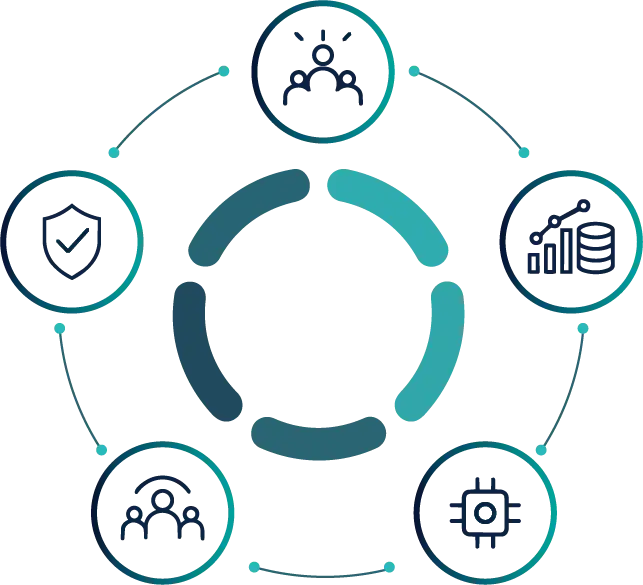
The Editor Economy looks at AI readiness across five interconnected pillars:
Together, they provide a practical view of an organization’s strengths, potential gaps, and overall preparedness to move from AI exploration toward implementation.
Understanding these five areas can help leadership teams make more informed decisions about where to focus, what may need attention, and when the organization is ready to progress.
AI adoption requires clear direction from leadership. This includes alignment around why the organization is exploring AI, where it could create business value, who is accountable for moving initiatives forward, and how AI fits within broader organizational priorities.
Strong leadership readiness helps move AI beyond individual experimentation or isolated projects. It creates the direction and ownership needed to make informed decisions, align resources, and guide the organization through implementation.

AI depends on the processes and information that already exist within an organization. Understanding how work gets done, where information resides, and whether data is accessible and reliable helps determine where AI can be applied effectively.
Process and data readiness provides the operational foundation for AI adoption. When processes are understood and organizational information can be used effectively, leaders are better positioned to identify practical opportunities and support reliable AI outcomes.
An organization’s technology environment influences how easily AI can be introduced, integrated and scaled. Existing platforms, systems and infrastructure all contribute to readiness, as does the organization’s current experience with AI tools and applications.
Technology readiness is not simply about having the newest systems. It is about understanding whether the current environment can support AI initiatives and how existing AI adoption – whether through individual experimentation, approved tools or formal initiatives – is developing across the organization.
AI changes more than technology. It can change how employees work, how managers lead, the skills organizations need, and how responsibilities are distributed across teams.
People and culture readiness reflects an organization’s ability to adapt to these changes. Employee openness, management capability, education and experience with previous transformation initiatives can all influence adoption. Preparing people to understand and work effectively with AI is an important part of creating sustainable organizational change.
As AI use expands, organizations need clear expectations around how it can be used, who is accountable, and how organizational, customer and employee information is protected.
Governance and risk readiness considers whether appropriate policies, oversight and safeguards are developing alongside AI adoption. Establishing clear accountability and responsible-use practices helps organizations manage risk while creating the confidence needed to expand AI use in a thoughtful and controlled way.
The Five Pillars work together. Strength in one area does not necessarily compensate for gaps in another, and every organization will have a different readiness profile.
The free 5-minute Snapshot provides an initial view of your organization’s AI readiness across all five pillars – helping you understand where you appear well positioned and where additional attention may be needed before moving forward.